What Atherton’s Data-Driven Residents Track After Installation
Within the first two weeks of consistent daily use, most Atherton residents who track these metrics notice the same pattern: HRV trends upward (typically measurable within 10–14 days), sleep score improves specifically in slow-wave sleep duration, and resting heart rate drops slightly as a lagging indicator of autonomic improvement. The mechanism is well-understood: daily parasympathetic activation through sauna use systematically rebalances the autonomic nervous system that sustained professional and cognitive demands push toward sympathetic dominance.
The jet lag application is specific to this community: a session on the evening of a long-haul return from New York, London, or Tokyo reduces the cortisol elevation and circadian disruption that typically cost two or three days of degraded performance. It’s one of the most consistent reports from Atherton residents who travel internationally for work. Read the full research on infrared sauna benefits.
Infrared vs. Traditional Sauna for a Bay Area Home
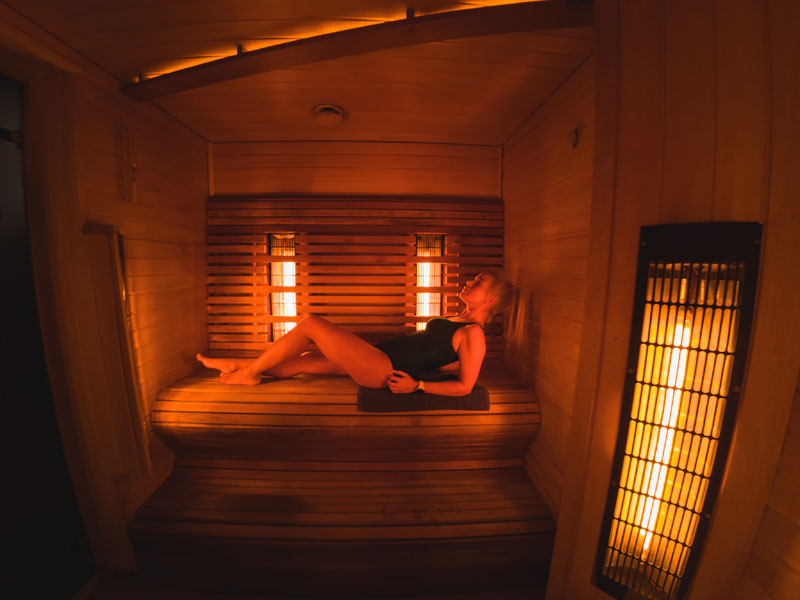
A traditional rock sauna requires plumbing for water, a heated rock bed, specialized ventilation, and 45 minutes of heat-up time. It also requires a dedicated room with appropriate construction. An infrared cabin needs only a dedicated electrical circuit, fits in an existing room, heats up in 15–20 minutes, and operates at a more comfortable ambient temperature for longer daily sessions. For a home where the sauna is used every day rather than occasionally, infrared is operationally superior — and for the daily use that the longevity data requires, that operational difference is the entire argument. Full comparison here.