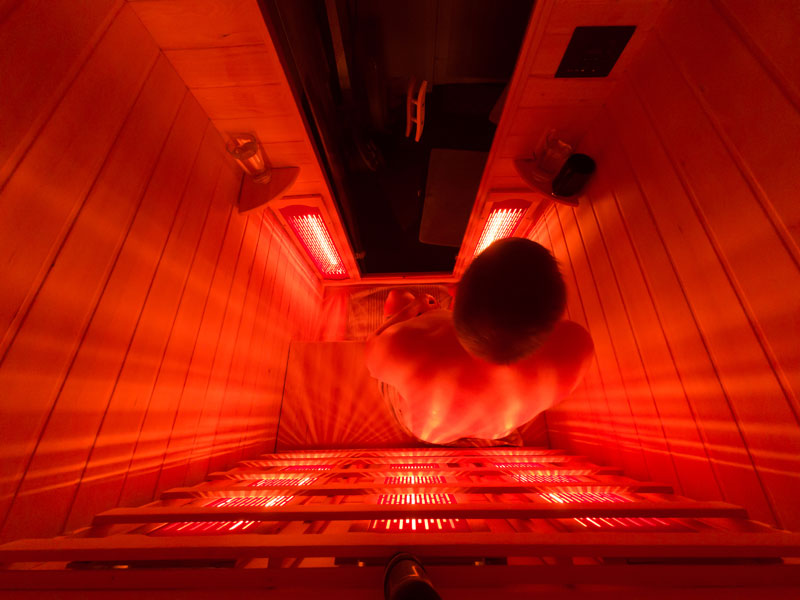
Traditional rock saunas are culturally resonant and genuinely effective — but they take 45 minutes to heat, operate best at 180–200°F, and require a level of ventilation and water management that mountain homes don’t always accommodate easily. An infrared cabin heats up in 15–20 minutes, operates at 120–150°F ambient temperature while still producing deep core warming through far-infrared wavelength absorption, and requires only a dedicated electrical circuit to run. For a home used seasonally with variable occupancy, the practical difference is significant.
The therapeutic argument for infrared at the Yellowstone Club is straightforward: ski fatigue lives in the deep muscle and connective tissue of the quads, hip flexors, and lower back. Far-infrared heat reaches those layers at a depth that a hot tub’s surface warmth doesn’t approach, increasing circulation to the fatigued tissue and initiating the anti-inflammatory cascade that determines whether tomorrow’s first run feels like Tuesday’s or Monday’s.